


Refrigerated Vehicles – AS 4982 Compliance Testing

Refrigerated Vehicle Compliance Testing to AS 4982

3 logos

SuperTest is NATA Accredited. 

SuperTest conducts testing in our ISO/IEC 17025 accredited laboratory, providing results that are traceable, repeatable, and recognised internationally through ILAC and the APAC MRA. We also hold Quality Certifications ISO9001 and IATF 16949.

Iso logo

Non-accredited test

Whilst this bespoke test description does not fall under our NATA ISO/IEC17025 accreditation, SuperTest uses our established quality framework to ensure quality, impartiality, traceability, comparability, and validity in all our outputs. We also hold Quality Certifications ISO9001 and IATF 16949.

IMG 3094 scaled supertest cropped

AS 4982 Standards Testing for Refrigerated Vehicles

AS 4982 is the Australian standard governing the classification and performance validation of refrigerated transport equipment, including trucks, semi-trailers, and rigid body vehicles used to carry temperature-sensitive goods.

Testing under this standard verifies that a refrigerated vehicle can maintain the required cargo temperatures under defined conditions, confirming its classification, thermal integrity, and refrigeration performance.

This includes food-grade compliance relevant to cold chain logistics, pharmaceutical transport, and perishable goods delivery across Australia.

AS 4982 categorises refrigerated vehicles based on their thermal performance and intended operating temperature range. Classification is assigned from test results, not self-declaration, and indicates the temperature environment a vehicle can sustain, and therefore the cargo it is capable of carrying.

SuperTest can validate compliance across the relevant classification categories defined by the standard, from light insulated bodies through to mechanically refrigerated vehicles operating at deep-freeze temperatures.

Testing Framework & Conditions

SuperTest performs AS 4982 validation across three core test stages. Each builds on the last, delivering a full picture of how a refrigerated vehicle performs, from its thermal envelope through to the power of its refrigeration system.

Step 1: Air Tightness Test

Before any thermal measurement can occur, the vehicle’s body is tested for air leakage. Air infiltration directly impacts a vehicle’s ability to hold temperature: even a well-insulated body will underperform if seals, door gaskets, or penetrations allow warm air exchange.

The airtightness test pressurises the cargo space and measures leakage under controlled conditions.

Results establish the integrity of the vehicle body and inform the interpretation of all subsequent thermal testing.

Step 2: Heat Leakage Test & the K-Coefficient 

With airtightness established, the vehicle’s resistance to heat transfer is measured. This is expressed as the K-coefficient: a key figure that quantifies how much thermal power (in watts) passes through the vehicle body per unit of surface area per degree of temperature difference between inside and outside.

How the K-coefficient is calculated

The vehicle is placed in a controlled environment and brought to a defined temperature differential between the interior and exterior. Once steady-state conditions are reached, the rate of heat transfer is measured and used to derive the K-coefficient. A lower K-coefficient indicates better insulation performance.

The K-coefficient determines:

  • Which AS 4982 classification the vehicle qualifies for
  • How hard the refrigeration system must work to maintain temperature
  • The vehicle’s expected thermal performance over its operating life

Step 3: Refrigeration Performance Test

With the K-coefficient known, testing moves to the refrigeration system itself. Two things are measured:

Reserve Refrigeration Power is how much cooling capacity the system has in excess of what is needed to offset heat leakage under standard conditions. Adequate reserve is critical for pulling down warm product, recovering temperature after door openings, and holding performance in high ambient conditions.

Temperature-Holding Performance is the system’s proven ability to reach and hold the required inside temperature at the rated outside temperature, including with an additional heat load applied to simulate real-world demand. This confirms the unit can maintain its classification temperature in service, not just produce cooling capacity in isolation.

Together, these confirm the refrigeration system is genuinely capable of supporting the vehicle’s classification, not just nominally rated to do so.

Fuel Efficiency Considerations

AS 4982 testing also produces data that can inform the energy and fuel cost of running the refrigeration system. Knowing the K-coefficient and the reserve power required lets operators estimate the energy needed to maintain temperature over a given route or operating day.

For fleet operators, this data supports decisions about vehicle selection, refrigeration unit sizing, and route optimisation, with a direct connection to operating costs and emissions profiles.

Our test chamber for refrigerated vehicles

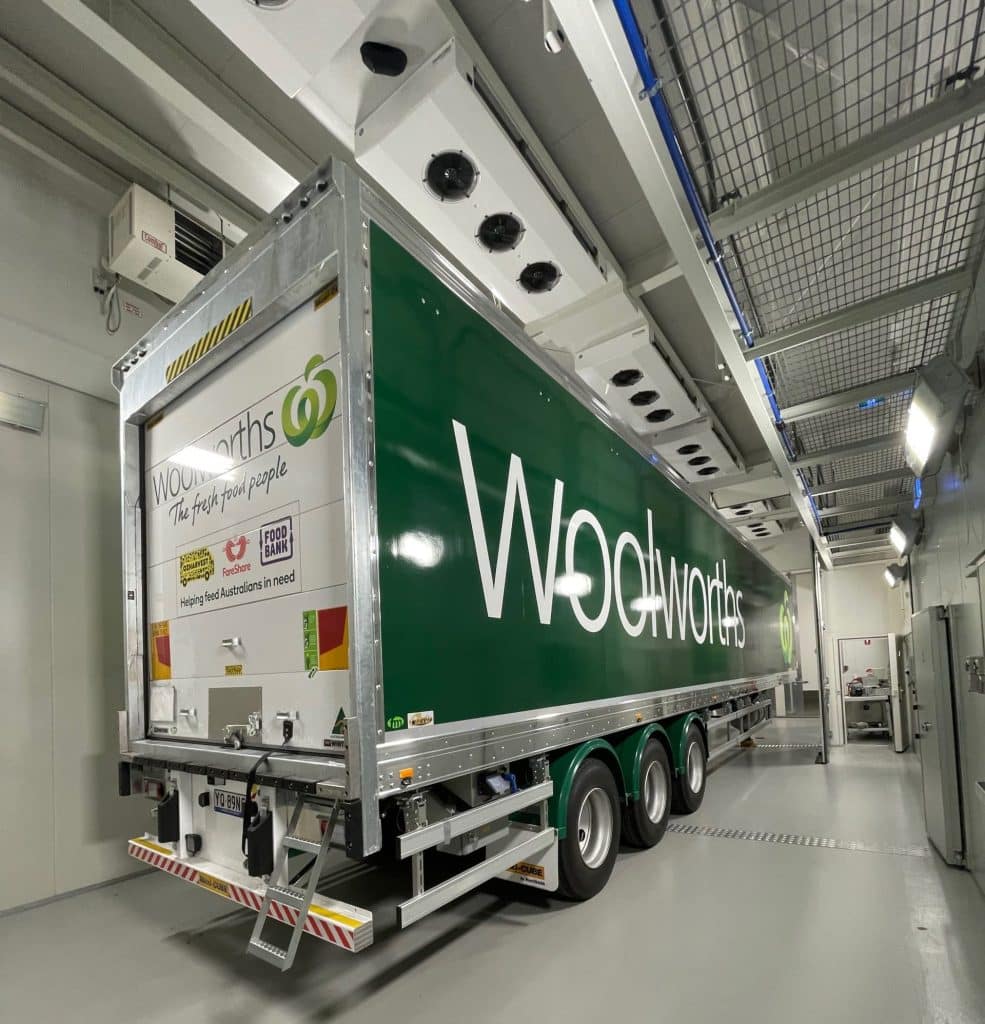
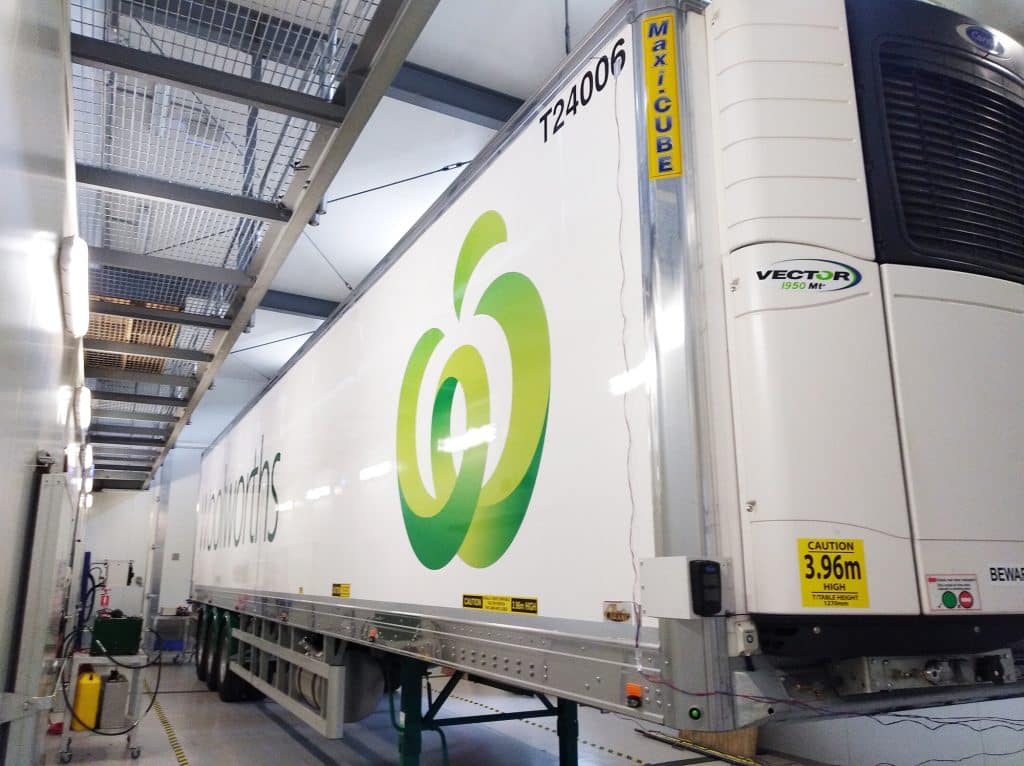
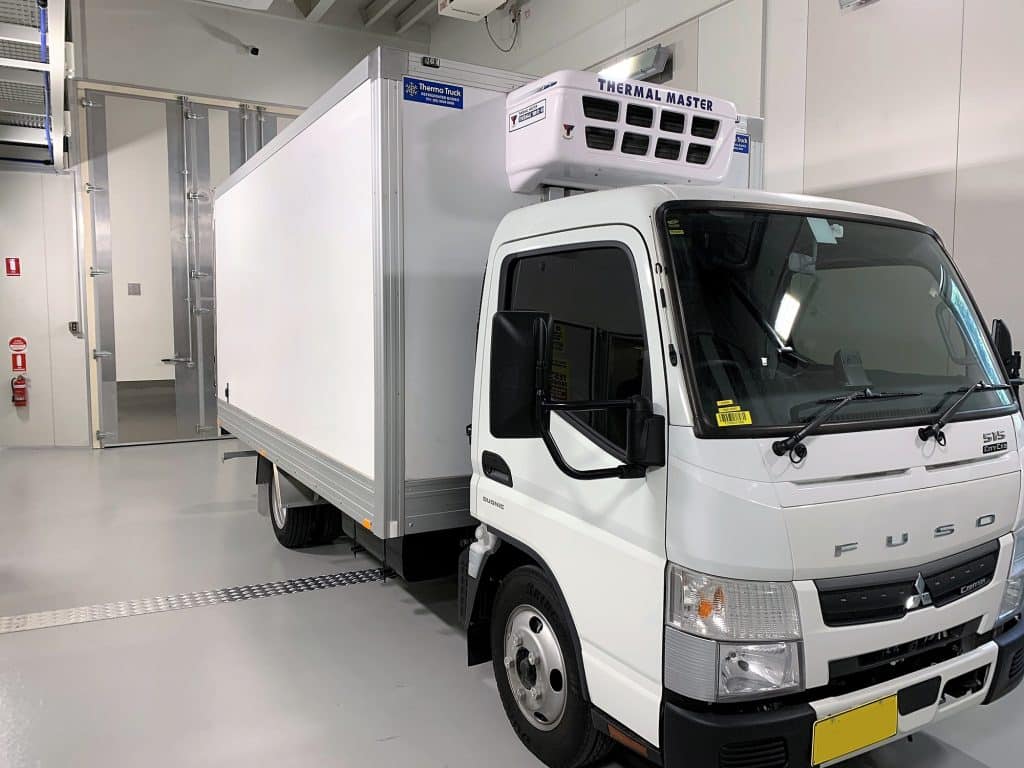
Our primary environmental chamber is specifically designed for testing refrigerated vehicles and is large enough to accommodate a semi-trailer. 

  • 19.8 metres long × 6 metres wide × 6 metres high
  • Secondary internal door allowing the chamber to be divided into two sections (13.3m and 6.5 m zones)
  • Entry door dimensions: 3.98 metres wide × 4.5 metres high
  • Dry bulb (DB) Operating temperature range: 0°C to 50°C
  • Environmental control tolerance +/- 1.5°C DB only
  • Integrated cool room suitable for cold chain process simulation and controlled product handling scenarios
  • Controllable in three zones with heating and cooling

Discover our facility

See how companies like Eurocold have partnered with SuperTest to test and validate their fleet of refrigerated vehicles.

IMG 20190110 145408 utd
SuperTest Truck Branding Removed

AS4982 sample reportYour test report

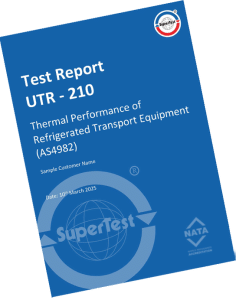
Once testing is complete, you will receive a report confirming your vehicle’s AS 4982 classification — the temperature environment it can maintain and the cargo that classification supports — its insulation performance (K-coefficient), and whether its refrigeration system has the reserve power and holding performance to sustain that classification under demanding conditions.

The results are independent, not self-declared, giving you defensible evidence for cold-chain compliance, fleet procurement, and vehicle-selection decisions.

More about SuperTest

Capabilities and facilities

Discover our Queensland based testing facility and the types of procedures we can perform

Applications and Case Studies

What we investigate, and how other organisations have benefited from controlled testing

Reporting and Consultation

Testing outputs, observations, and how we help you interpret your data

Governance and Accreditation

Testing may be performed under SuperTest's NATA accreditation, or custom designed for your needs

SuperTest helps you validate what matters.

Contact us about AS 4982 refrigerated vehicle compliance testing for trucks and transport equipment.

Search SuperCool

Find the best HVAC&R products for your mobile, industrial or commercial needs.